
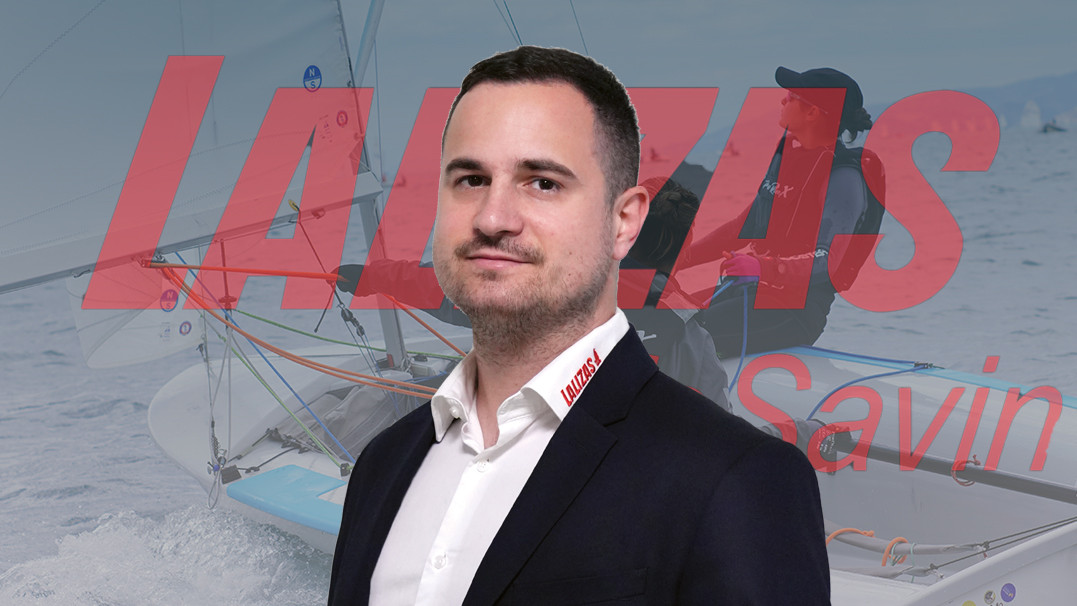
LALIZAS is among the leading companies worldwide in marine equipment and maritime safety. With more than 40 years of experience in the industry and operations in over 130 countries, 8 manufacturing plants, and 14 branches, the company designs, manufactures, and distributes thousands of products that meet the needs of commercial shipping and yachting.
Founded in 1982 in Piraeus as a small manufacturing unit for life-saving equipment, LALIZAS has evolved into an international organization offering full-range marine
equipment..
In the interview below, Iasonas Lalizas discusses developments in the maritime safety sector, emerging trends in the marine equipment market, and the role Cyprus can play in the company’s growth in the Eastern Mediterranean.
________________________________________
Cyprus is a particularly dynamic market for marine tourism and yachting. How do you assess its importance for LALIZAS’ growth?
Cyprus is a market of great interest for our sector. Despite its relatively small size, it has a strong maritime tradition and a dynamic ecosystem of companies operating around the sea. It is also a hub between Europe and the Middle East, with both positive and negative implications.
For LALIZAS, markets like Cyprus are strategically important, as they combine commercial shipping with yachting. This mix creates steady demand for both safety equipment and complete marine equipment solutions. At the same time, through our broader group portfolio-which includes leading manufacturers such as Lofrans’, MAX POWER, OCEAN Fenders, Nuova Rade, ARIMAR, and PYROTECH-we can cover a wide range of needs, making Cyprus a market with strong growth potential that we may not have fully explored yet.
What are the main needs you observe among boat owners and maritime professionals in Cyprus?
The core need remains the same over time: safety at sea. Whether it concerns commercial vessels or leisure boats, the proper selection, installation, and maintenance of equipment are critical. At the same time, customers are now more informed and demanding. They place greater emphasis on quality, certifications, compliance with international standards, and overall equipment reliability. Additionally, there is increasing demand for complete solutions-from safety equipment to deck equipment-something we address through our expanded portfolio of brands, which are not just represented by us but are part of our group, allowing us to offer a comprehensive package of services.
How does LALIZAS adapt its product range to the needs of the Mediterranean and the Cypriot market?
The Mediterranean is one of the most important global markets for yachting and marine activities, while also maintaining a strong presence in international shipping.
LALIZAS offers a very broad portfolio-from lifejackets and liferafts to rescue and firefighting equipment-fully covering maritime safety needs.
At the same time, through the group’s brands, we provide complete vessel solutions:
• Lofrans’ anchor windlasses
• MAX POWER bow thrusters
• OCEAN boat fenders
• Nuova Rade plastic components and accessories
• ARIMAR inflatable boats and liferafts
• PYROTECH marine pyrotechnics
This allows us to effectively adapt to each market’s needs and offer a comprehensive solution to the end user.
How does the growth of yachting and marine activities affect demand for equipment?
The growth of yachting and marine tourism has significantly increased demand-not only for safety equipment but for the full range of vessel equipment.
At the same time, there is a clear shift toward higher-quality and more reliable products, as boat owners increasingly understand the importance of proper equipment selection.
Timing is also crucial-customers need products when and where they require them.
Price remains an important factor, but overall value-the combination of quality, reliability, and support-is becoming increasingly decisive in purchasing decisions.
How important is technical support in a market like Cyprus?
Technical support is critical, as marine equipment-especially safety equipment-is not just a product but a system that requires certification, proper installation, and regular maintenance. For this reason, LALIZAS continuously invests in developing and collaborating with specialized partner networks and certified service stations to ensure proper operation and support throughout the product lifecycle.
What technological developments do you believe will most impact the industry in the coming years?
The maritime safety sector is constantly evolving, mainly through new standards and regulations that lead to more advanced products. These changes often arise after major accidents, prompting stricter rules. At the same time, there is increasing emphasis on prevention, crew training, and proper maintenance-key elements in improving safety at sea. In yachting, ease of use is becoming increasingly important. Traditional seamanship skills are gradually declining, while more people are turning to rental instead of ownership-a broader trend observed across industries. Therefore, products that simplify life onboard are gaining the most traction.
How do international economic and geopolitical developments affect the sector?
Shipping is one of the most globalized sectors, so it is directly affected by global developments. However, safety at sea remains a top priority. Regardless of economic conditions, compliance with regulations and crew protection remain essential.
For other product categories, demand tends to decrease during economic downturns. Hopefully, the current regional instability will ease soon, as economic activity is closely linked to consumer phsychology and confidence-uncertainty makes people more cautious and less willing to spend.
How is customer behavior changing with the growth of e-commerce?
Digital transformation has significantly changed how customers search for and evaluate products. Many start their research online, comparing solutions and technical specifications before consulting specialized partners. However, in marine equipment, technical expertise and personal advice still play a crucial role. Especially in markets like Cyprus, customers tend to rely on trusted professionals for guidance-this is consistent feedback we receive from our local team.
Do you believe artificial intelligence will impact the industry in the future?
Artificial intelligence is already influencing many areas of shipping, mainly in data analysis and process optimization. In yachting, it is still too early to determine how it will directly benefit the end consumer. For us as a company, AI can contribute to areas such as demand forecasting, inventory management, and better understanding customer needs.
What is your vision for LALIZAS’ growth in the Eastern Mediterranean?
The Eastern Mediterranean is a region with significant potential, both in shipping and in yachting and marine tourism.
Our goal is to continue investing in innovation, quality, and strengthening our international presence-especially through establishing new branches-so that LALIZAS remains a reliable partner for the maritime community.
Markets like Cyprus can play a key role in this strategy, acting as hubs for growth and collaboration in the wider region. At the same time, we aim to further strengthen local partnerships and tailor our solutions to each market’s specific needs, ensuring sustainable long-term growth.