
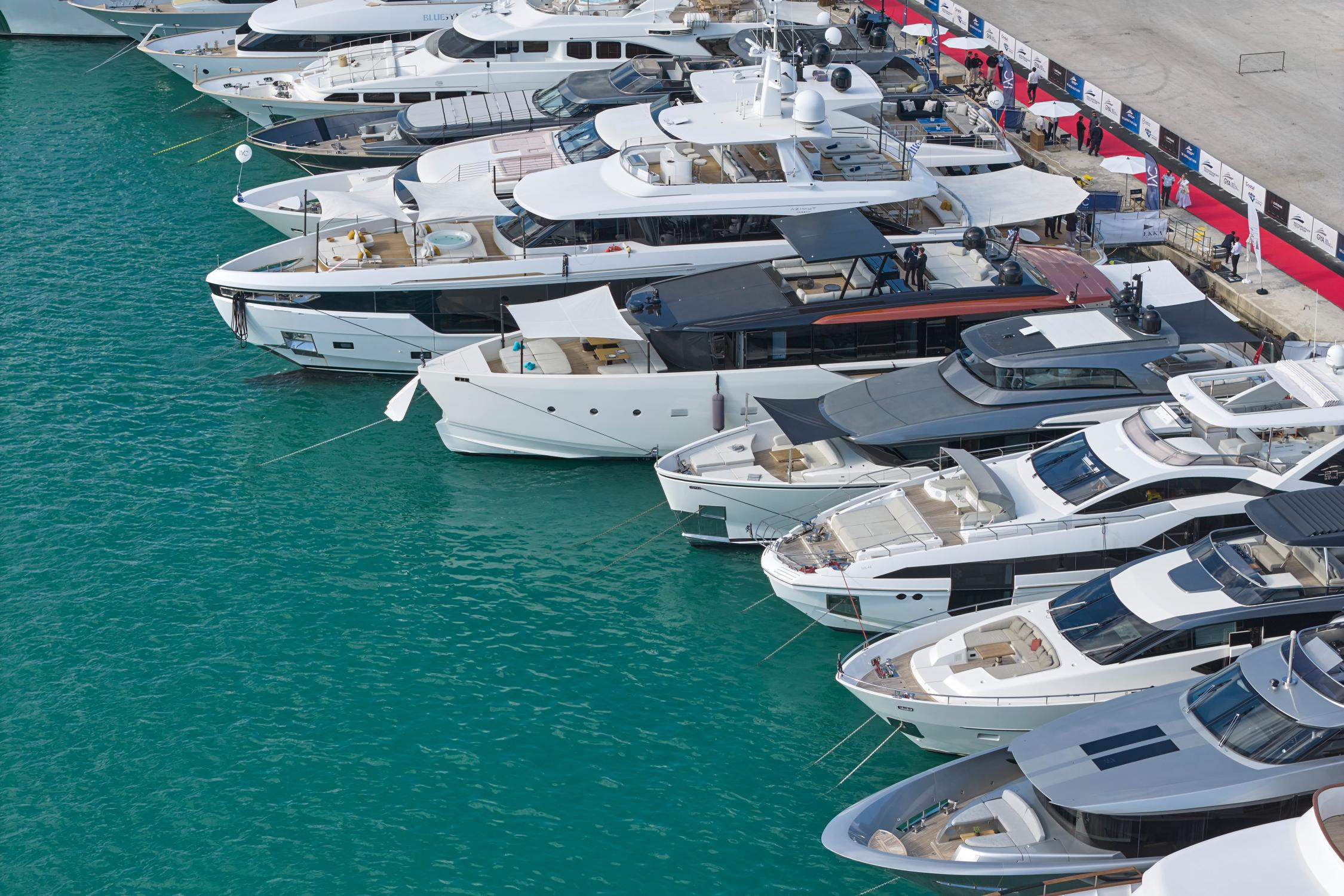
The Greek Yachting Association outlines charter rate trends, international demand and early indications for the 2027 season
Resilience and strength in charter rates. The US market remains a key pillar of demand.
Athens, 20 October 2026
The summer season of 2026 concluded on a positive note for Greece’s professional yacht charter market, confirming yachting’s position as one of the most important and high-value-added sectors of Greek tourism, with a share of the international market exceeding 20%.
According to the data and indications collected to date by the Greek Yachting Association, the market recorded stable charter numbers compared with 2025, alongside an increase in the overall value of charter bookings.
Overall Charter Market Performance
In terms of total value, charter rates in 2026 appear to be trending upwards compared with the previous year, recording a positive change. However, the differing performance across individual market segments is particularly noteworthy.
The premium charter segment recorded a significant increase in demand, confirming the growing strength of the high-end market. In the mid-range segment, a marginal decline was observed, while the lower-priced segment recorded a slight increase.
This divergence provides an important indication of the market’s overall direction, highlighting not only changes in charter volumes but also shifts in average charter value and demand profiles.
Greece Strengthens Its Position in the Mediterranean Market
In an increasingly demanding competitive environment, Greece appears to rank among the leading destinations in the international yacht charter market, competing with established and emerging destinations such as France, Italy, Spain, Croatia, Montenegro and Turkey.
The Greek market demonstrates strong momentum across the main yacht categories — motor yachts, sailing yachts and catamarans — with particular emphasis on the premium segment. Meanwhile, activity in the Mediterranean charter market remains relatively evenly distributed between the Western Mediterranean (Spain, France and Italy) and the Eastern Mediterranean (Greece, Turkey, Montenegro and Croatia).
Croatia remains a particularly significant competitor in the smaller yacht segment, mainly due to its extensive sailing yacht charter fleet. In recent years, however, it has also become an increasingly attractive destination for larger yachts. Turkey is gradually recovering, although its market continues to face challenges.
Against this backdrop, the competitiveness of Greek yachting depends not only on the number of available yachts or the volume of charters, but primarily on the country's ability to maintain high value per charter and deliver an overall high-quality, competitive product.
Maintaining strong demand and healthy charter rates, combined with the continuous improvement of services and infrastructure, is crucial to further strengthening Greece's position in the Mediterranean market.
The Geography of Demand
International customers continue to be a key pillar of Greek yachting, although demand varies across markets of origin.
The US market, which has gained particular importance for the sector in recent years, recorded an increase in 2026 compared with 2025. American clients remain a particularly important audience for premium and luxury yachting, generating high per-capita expenditure and making a significant contribution to the overall value of charter bookings.
Meanwhile, the European market remained stable, with minor variations across traditional source markets such as Germany, the United Kingdom, France and Switzerland. By contrast, demand declined from the Middle East, Australia and Asia, while increased interest was recorded from South America.
Maintaining a balanced mix of source markets remains essential for the sector, reducing dependence on individual markets and strengthening the resilience of Greek yachting in response to changes in the international economic environment.
A Shift Towards Last-Minute Bookings
Another defining characteristic of the 2026 season was the increase in last-minute bookings compared with the previous year.
This trend reflects a broader change in traveller behaviour, with customers increasingly making their final decisions closer to their departure dates.
For businesses operating in the sector, this development had a direct impact on seasonal planning, availability management and commercial strategy, making flexibility and the ability to respond quickly to changing demand increasingly important.
Early Indications for 2027
With the industry already looking ahead to the coming year, the first indications for the 2027 season are creating positive expectations.
Based on enquiries received to date, initial bookings and international demand for Greece, the Greek Yachting Association estimates that the market could perform better in 2027 than in 2026.
However, further growth does not depend solely on international demand. The competitiveness of Greek yachting is directly linked to maintaining a stable and competitive regulatory and tax environment, developing and upgrading port infrastructure and marinas, and ensuring that the country delivers high-quality services across the entire marine tourism value chain.
The President of the Greek Yachting Association, Ioannis Kourounis, commented:
“The 2026 season gave us a clear picture of how the international yachting market is evolving and, above all, how customer behaviour is changing. Greece maintains an exceptionally strong position on the international map, with significant competitive advantages ranging from its natural environment and the diversity of its destinations to the quality of its professional fleet and the services provided.
“Our objective for the coming years must be to further strengthen this position through competitiveness, quality and sustainable development. We also hope that the implementation of the electronic charter agreement will enable the systematic collection and use of official statistical data, providing an even more comprehensive and accurate picture of the sector’s performance in the years ahead.”
Marine tourism generates a significant economic impact, as the operation of a professional pleasure yacht creates a multiplier effect across a wide range of the Greek economy. These benefits extend from crew members, marinas, shipyards and technical service providers to restaurants, provisioning companies, transport operators and local businesses in the destinations visited by yachts.
In an international environment characterised by increasing competition, maintaining and further strengthening Greece’s position represents both an opportunity and a strategic priority, ensuring that Greek yachting continues to develop as one of the country’s most important pillars of high-quality tourism.
END
Contact Information
For further press information, please contact Ms Dimitra Moraiti:
Mobile: +30 693 494 2281
Email: press@gya.gr
For membership enquiries and further information about the organisation or the Association, please contact Ms Meny Tsavari:
Tel.: +30 210 9811717
Email: info@gya.gr